Selling Your Business in 2026? Here's Who's Actually Buying

Dylan Gans
⋅
6 min read
If you're thinking about selling your business, you already know the kind of person you'd want running it. What you probably don't know is who's actually out there.
That gap is expensive. Sellers who misread the buyer pool price wrong, wait for a buyer who isn't coming, and leave real offers on the table.
We looked at 22,000+ active buyers on Baton to answer what sellers ask us most: who's buying, what they're looking for, how they finance a deal, and what they ask before they commit.
*Data sourced from Baton platform
Who is most likely to buy my business?
Individual: often the most relationship-driven buyer. They may move slower on financing, but can be easier to work with if they genuinely love the business and want to run it themselves. Good fit when the seller cares about legacy and continuity.
Strategic: usually the strongest fit if you want the highest chance of a premium valuation, because they may pay for synergies, cross-sell, geography, or competitive expansion. They can also move faster if the fit is obvious.
Search fund / independent sponsor: often serious and disciplined buyers, but they usually need to line up financing and may be highly focused on a specific buy box. Good if you want an operator who will take over personally, but expect a more structured diligence process.
Private equity: best when the business has scale, repeatability, and a clear growth story. PE can be attractive on price, but sellers should expect heavier diligence, more process, and often more negotiations around structure.
Family office: often a good middle ground. They can be flexible, patient, and sometimes more seller-friendly than PE, but the process varies a lot depending on the family’s goals and whether they want control or a passive investment.
Quick takeaway
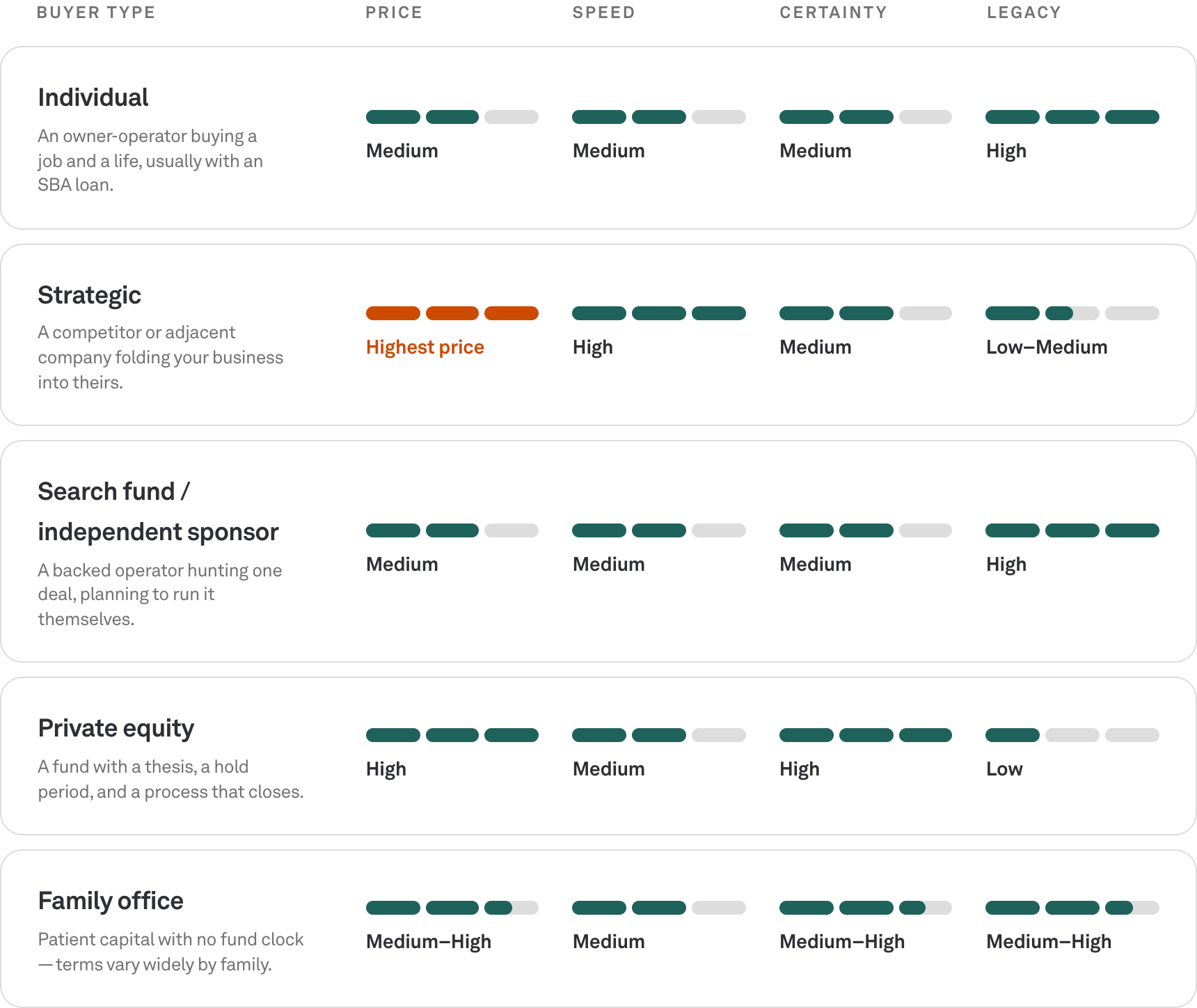
If you want:
Highest price: strategic
Best transition / legacy: individual or search fund
Most structured process: PE
Most flexible capital: family office
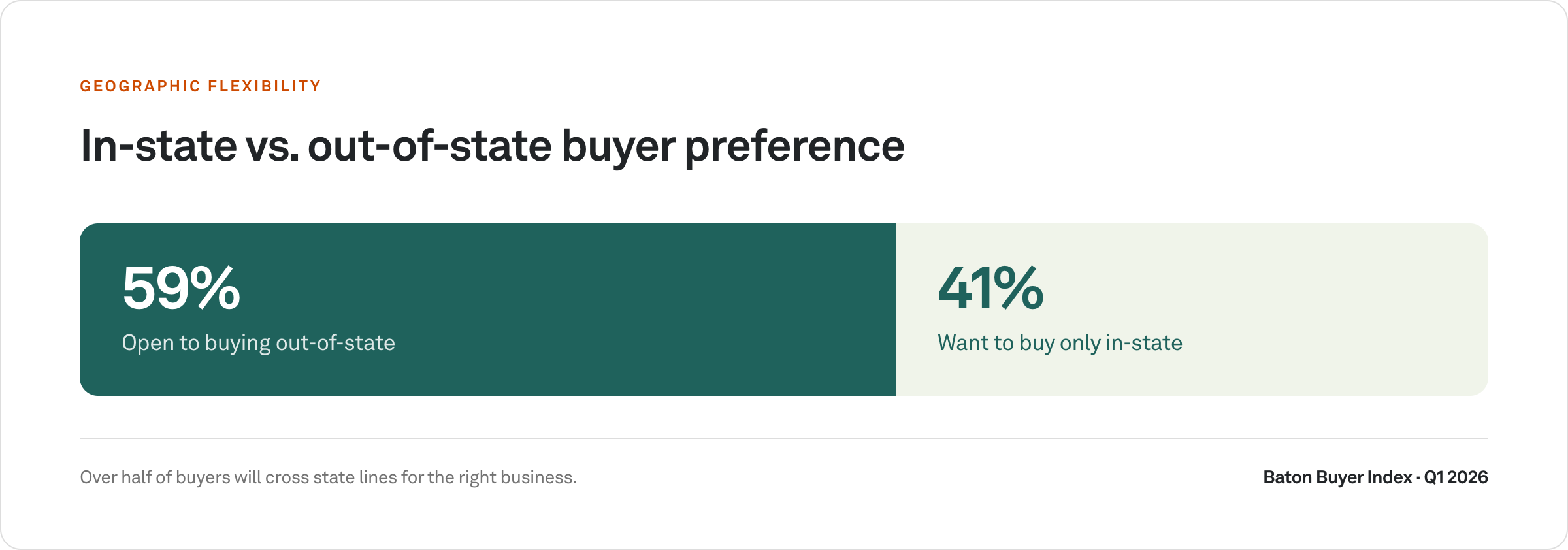
Today’s buyers are concentrated in major metros, but +50% will buy anywhere.
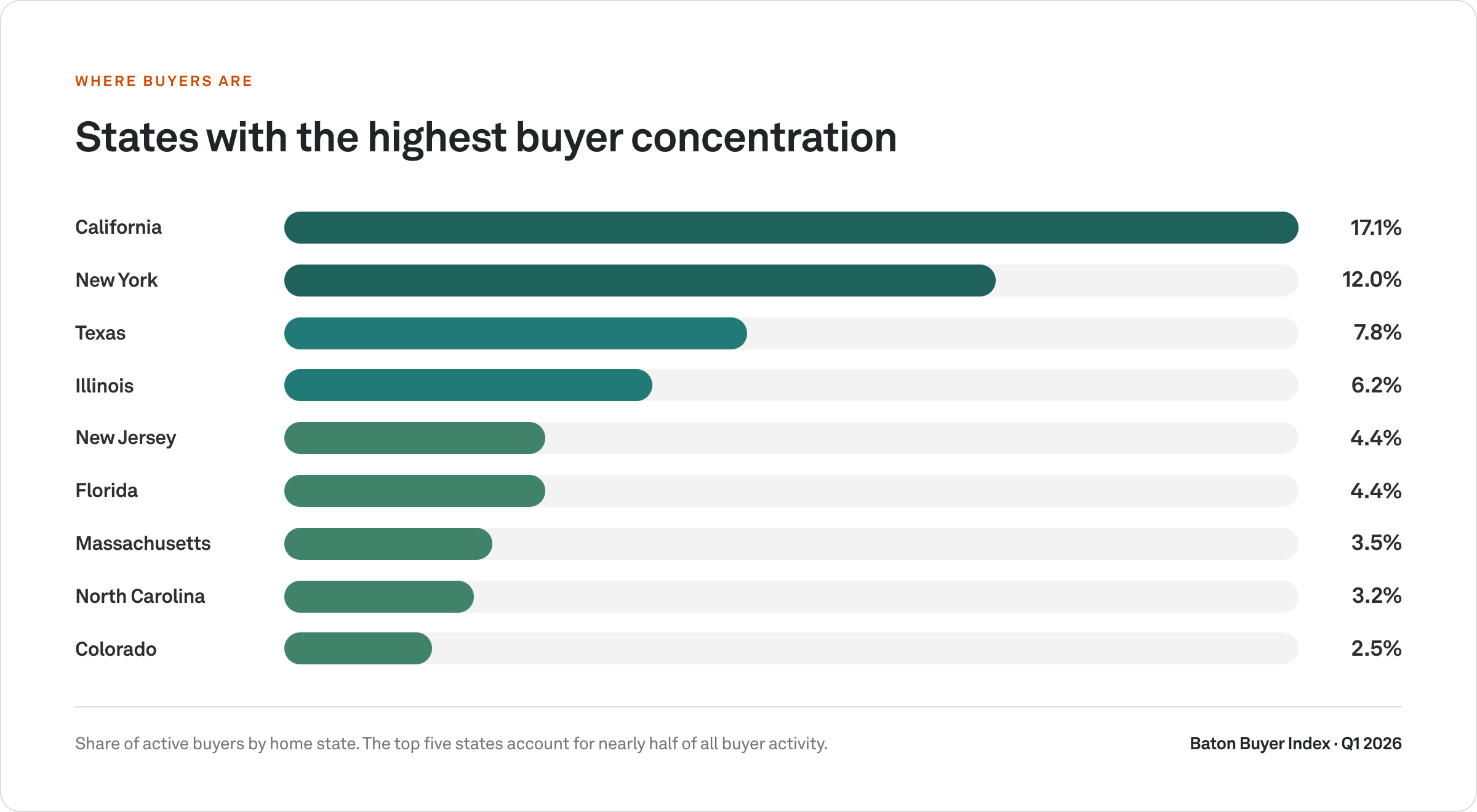
Let's start with where buyers are coming from. The top five states account for nearly half of all buyer activity on the platform. These are the major metro markets where corporate professionals are concentrated, where incomes are high enough to fund an acquisition, and where the appetite to own a local business is strongest.
But geography isn't the barrier sellers often assume it is. While some buyers prefer to stay close to home, over half are open to crossing state lines for the right business. Concentration doesn't mean limitation.
Today's buyer wants a recession-proof business and a full-time job.
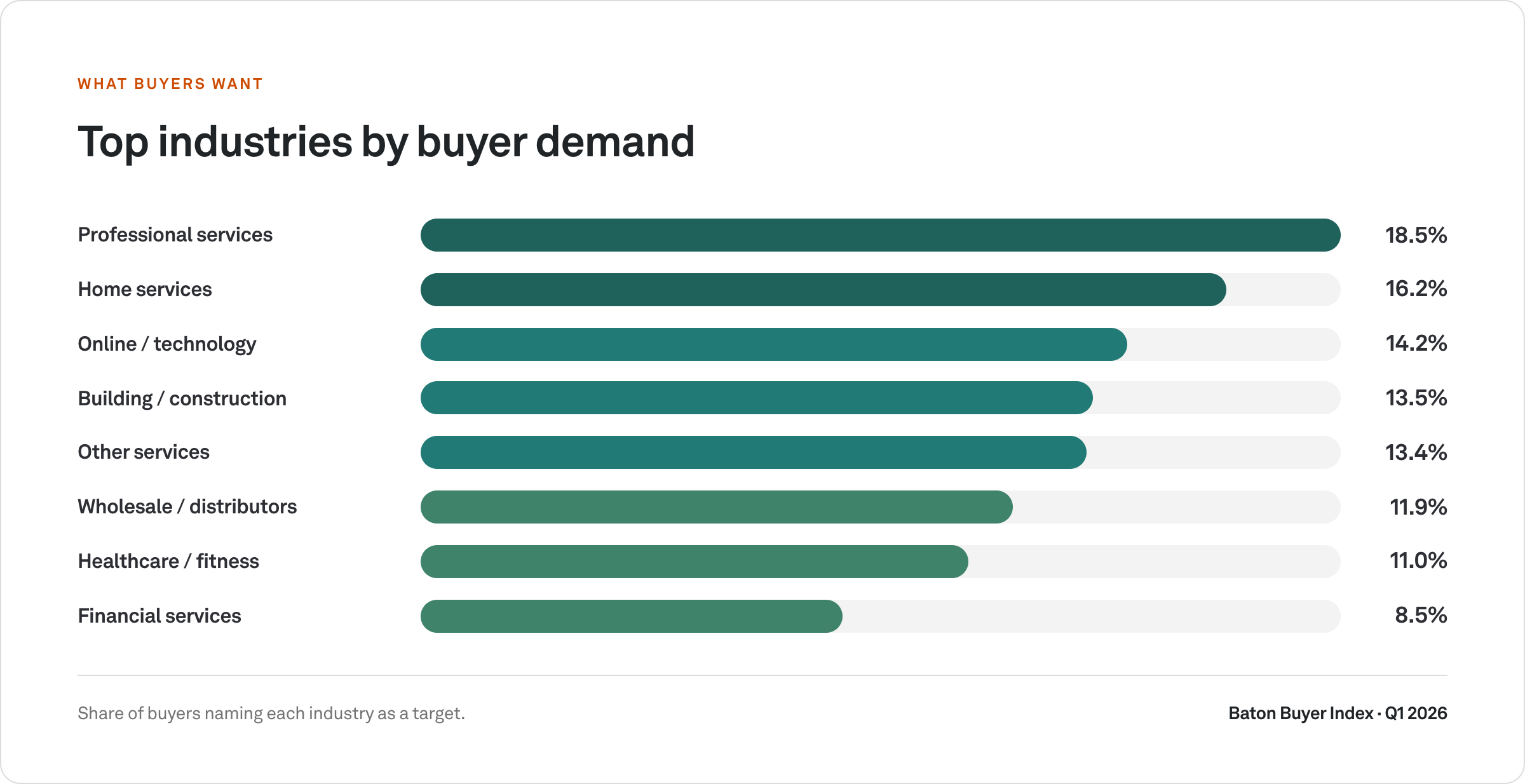
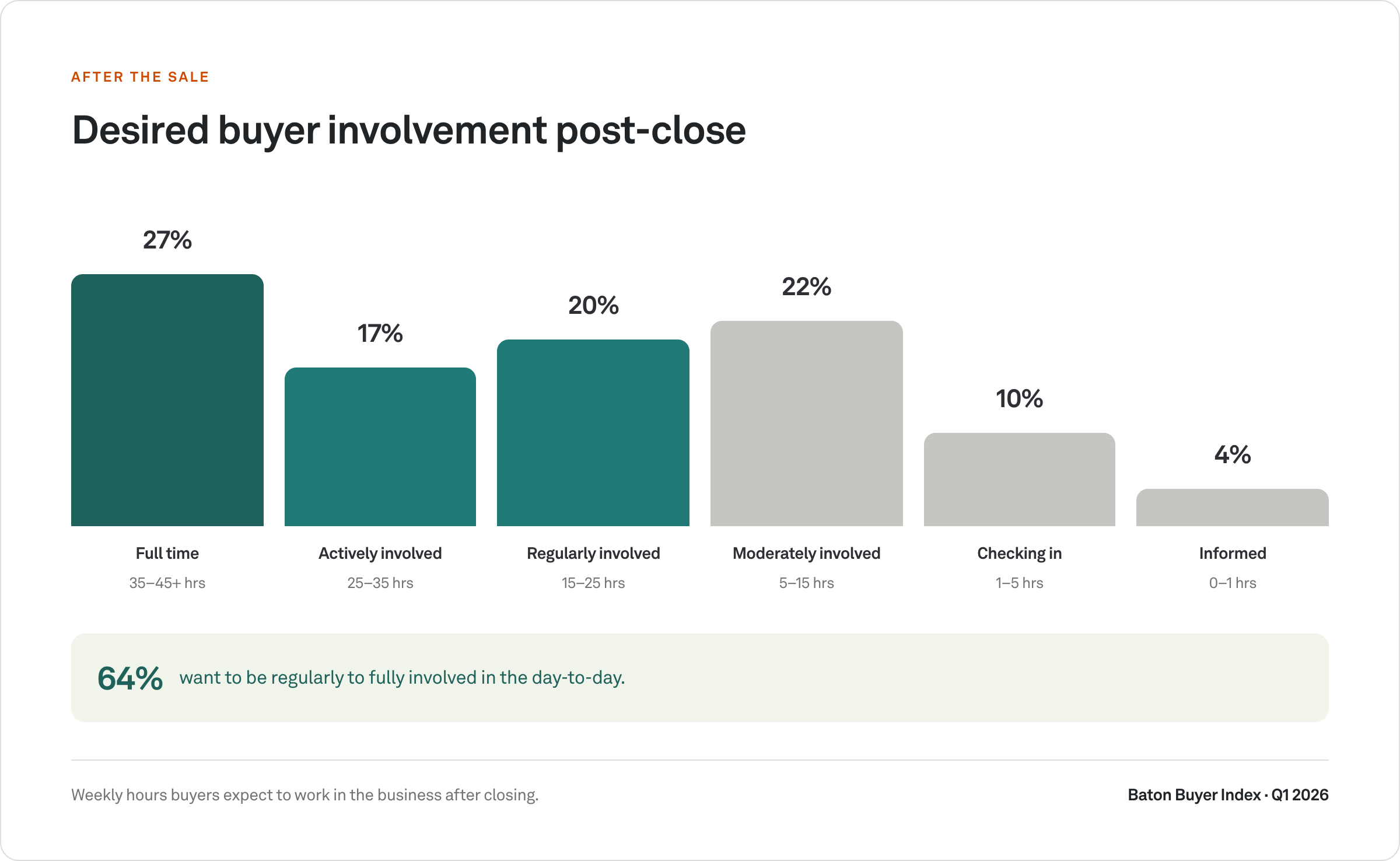
Today's buyer is looking for durability and wants to be hands-on. They're not planning to sit on the sidelines. Nearly two thirds (64%) want to be regularly to fully involved in the day-to-day. They've watched corporate layoffs, market volatility, and the rise of automation reshape entire industries, and they're going all-in on businesses that hold their value no matter what the economy or technology
Today's buyer spends the most time on research and due diligence.
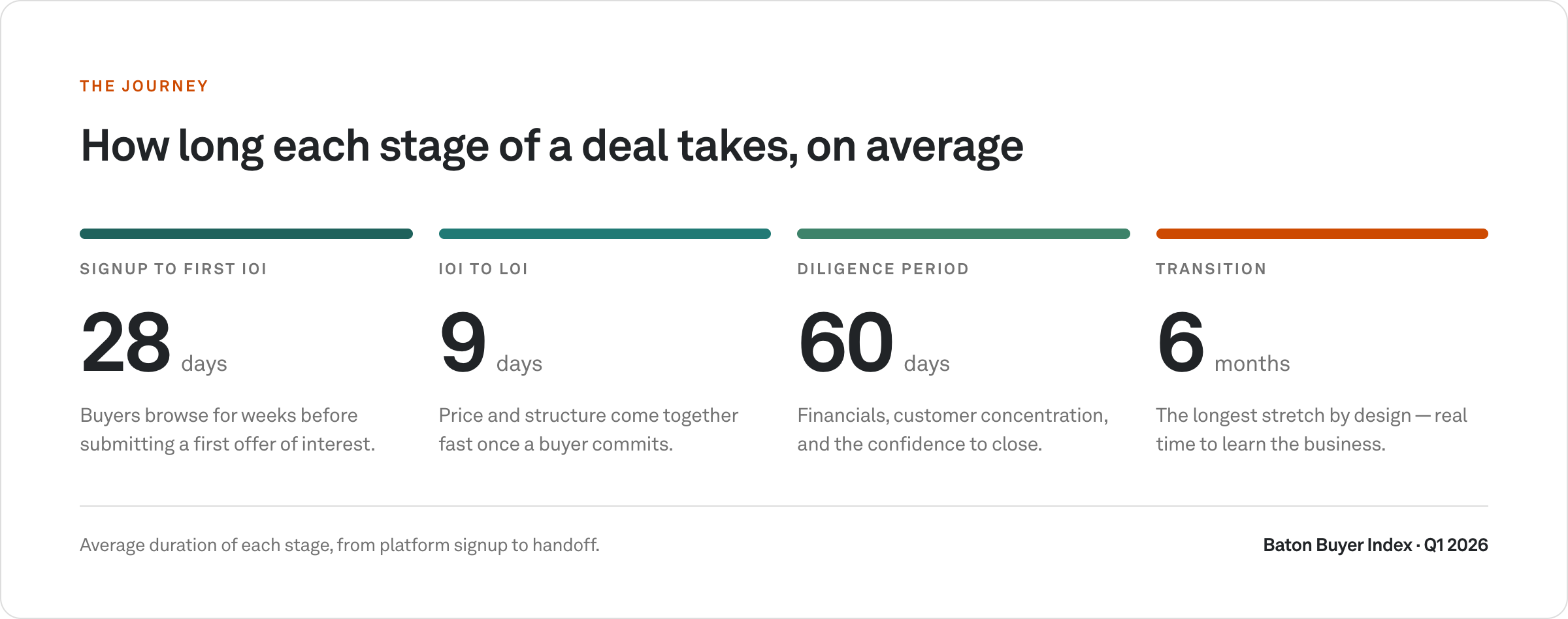
Key takeaway: Today's buyer approaches the search with intention, not volume. They spend weeks browsing before ever reaching out, doing their homework before they raise their hand. Diligence is thorough, and the transition is a real commitment. But once a buyer decides they want a business, they move quickly to formalize it
Today's buyer finances most deals with SBA and asks sellers to keep skin in the game.
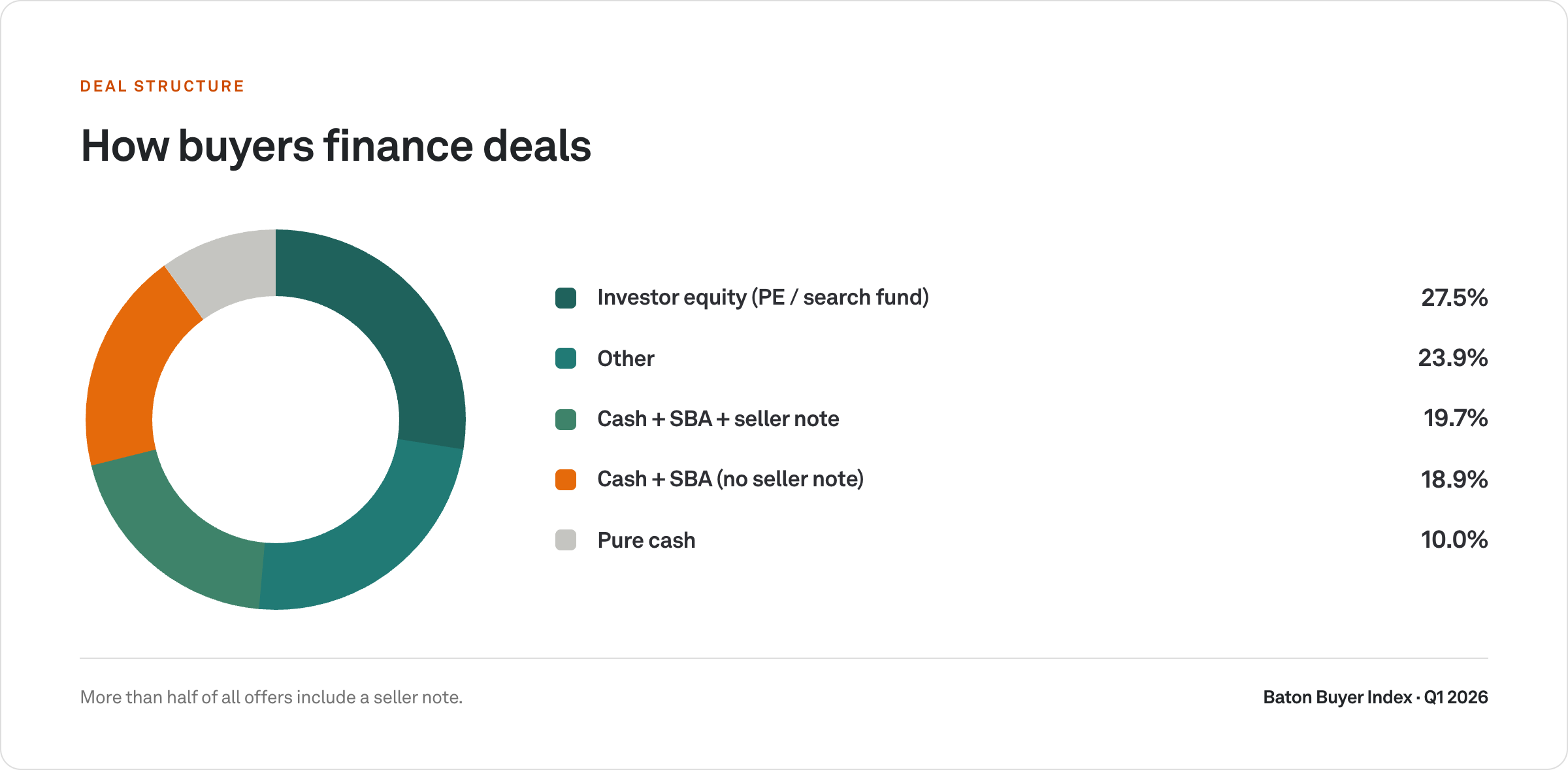
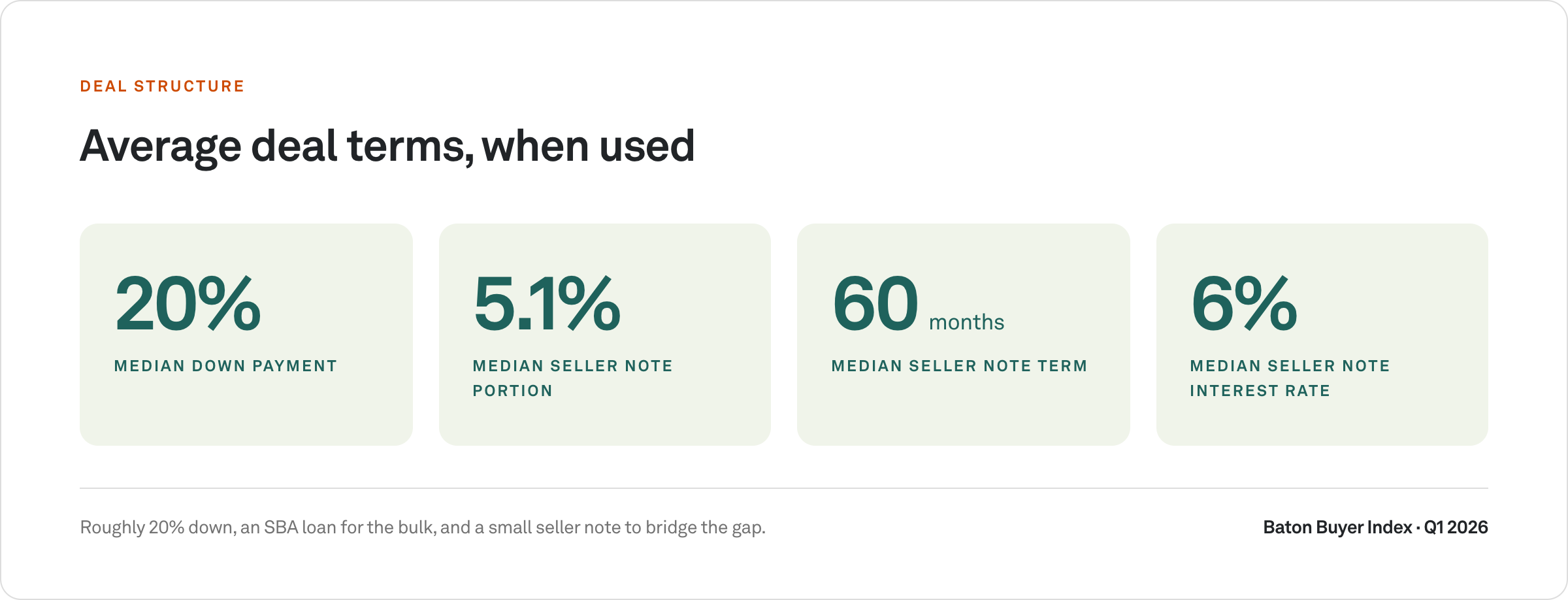
Key takeaway: Most deals follow a predictable structure: roughly 20% down, an SBA loan covering the bulk of the price, and a small seller note to bridge the gap. 53% negotiate a seller note. More than half of all offers ask the seller to carry a small portion, even when it's just 5% of the deal. Those who are open to seller notes tend to attract more buyers, better offers, and faster closes.
Today's buyer's first question is almost always about the numbers.
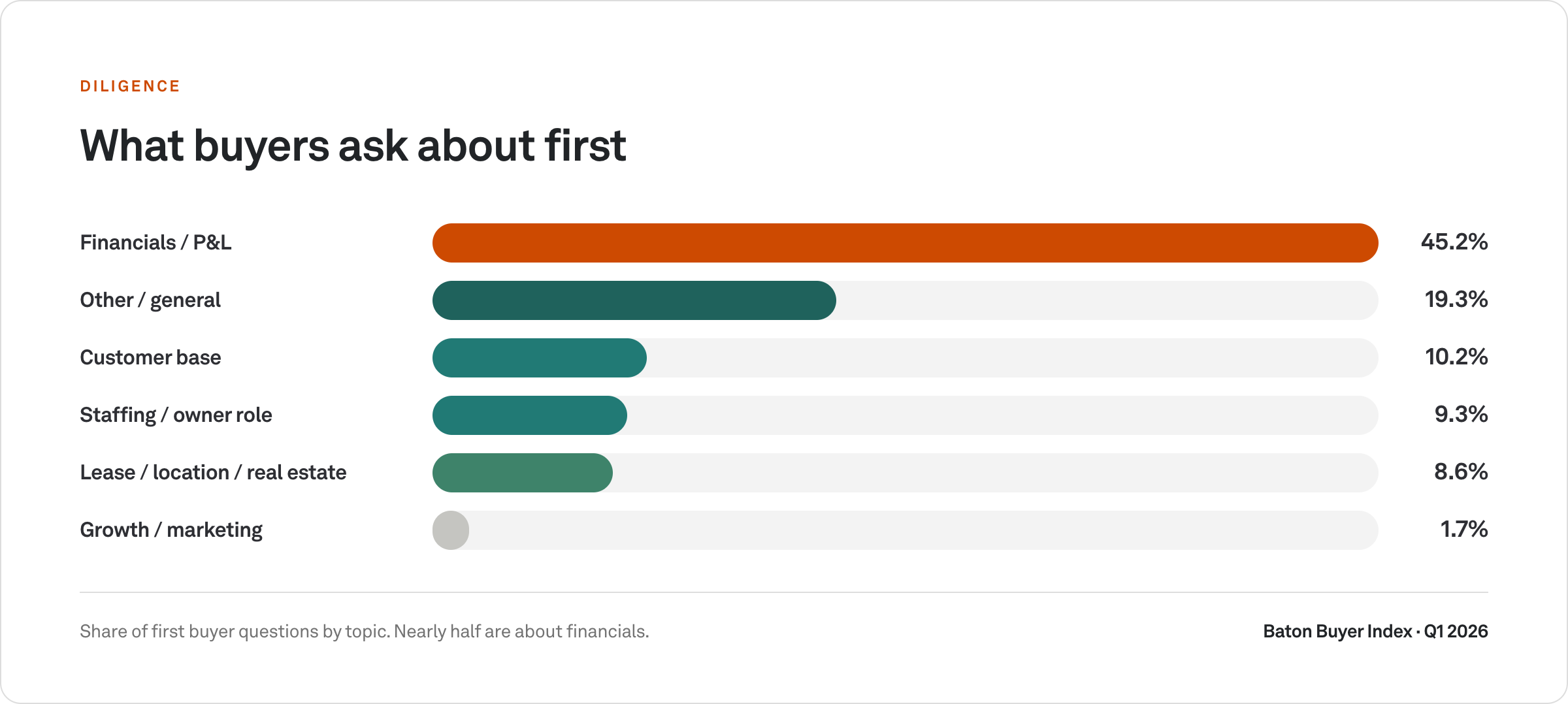
Key takeaway: Nearly half of all buyer questions are about financials. This is not the behavior of a tire-kicker. This is someone doing real diligence. They want to understand the business before they bet their savings on it. The sellers who are ready for these questions are the ones who convert these buyers. The sellers who aren't are leaving their best offers on the table.
Who to Watch in 2026: The Myth of the Sophisticated Buyer
Here's what the numbers actually show when you look at buyer profiles side by side.
Investor-Backed and PE buyers are the most active. They send the most introductions. They move early. They signal interest loudly. But their IOI-to-accepted-offer conversion rate is half the accepted rate of self-funded searchers.
On the other hand, self-funded buyers have one of the highest rates of serious market engagement. Individuals using SBA loans, personal capital, or a combination, have more on the line than any other profile in the market, and it shows. They're the largest segment in the market by a significant margin, with over 1,250 active buyers. And when they submit an offer, sellers accept it at a rate that would surprise most people in the room.
The all-cash buyer technically converts at the highest rate. But the story worth paying attention to is the self-funded buyer, working with SBA financing and personal savings, showing up with serious intent and the homework to back it up.
These are people leaving corporate careers. People who've spent months, sometimes years, researching industries, running financial models, talking to brokers, and getting their lending in order before they ever send an introduction. They have skin in the game in a way that an institutional buyer simply doesn't.
Final Thoughts
Every deal starts with understanding what a business is actually worth, For sellers, knowing that number, built on real financials, normalized to SDE, and benchmarked against comparable transactions, is what puts you in a position to attract serious buyers and close on your terms.
If you're a buyer, know that Baton's listings are vetted, financeable businesses with real numbers behind them. If you've done the work to get here, the next step is finding the right business to back it up.
Frequently Asked Questions
Who is buying small businesses right now? The market includes PE firms, first-time buyers, and everything in between. But the segment worth watching is the self-funded individual. According to Baton's data, they're among the most active buyers in the market, and they close at rates that most institutional buyers can't match.
Are PE buyers the best buyers for small businesses? It depends on your goals. PE-backed buyers are active, well-capitalized, and can move quickly, but for sellers who prioritize certainty of close, other buyer profiles, like self-funded buyers, can be just as compelling,
What do buyers ask about most? Financials, overwhelmingly. Nearly 40% of all buyer questions are about P&Ls, tax returns, and revenue breakdowns. Sellers with clean books and a clear SDE story convert the best buyers fastest.
What makes a business attractive to today's buyers? Predictable revenue, clean financials, and a business that doesn't depend entirely on the owner. Buyers are looking for durability: something they can own for a decade, not flip in three years.
Do I need to be PE-backed to compete as a buyer? No. Preparation and genuine intent often matter more than who's backing you.